
Smart field operations
Digitize field workflows, forms and inspections with reliable offline sync.
The technologies our teams deploy for subsurface utility engineering, leak detection, condition assessment, energy audits and NRW baselining, and the digital tools that turn field data into decisions.
Digital tools that connect field data, assets and performance so utilities can act faster.
Digitize field workflows, forms and inspections with reliable offline sync.
Prioritize NRW reduction using pressure, leak and performance insights.
Connect asset records with map-based visibility for faster interventions.
Track operational KPIs in real time for better planning and decisions.
Subsurface utility engineering before any excavation.
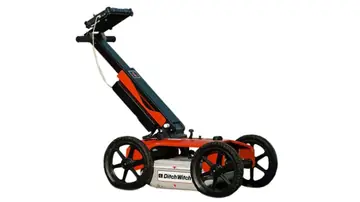
A non-invasive technology that uses radar pulses to detect and map underground utilities, pipes and structures without excavation. In water infrastructure projects it is a key tool for subsurface utility engineering, enabling safe identification of buried assets before any field intervention.
Underground Utility Mapping and GPR →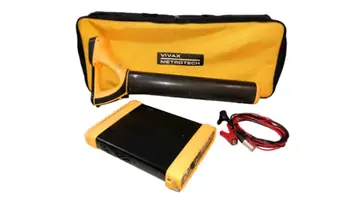
An electromagnetic instrument that detects and traces the path of buried metallic pipes, cables and utilities. It is integrated into subsurface utility engineering workflows to map existing underground infrastructure before construction or maintenance, preventing service disruption.
Also called: utility locator transmitter and receiver.
Underground Utility Mapping and GPR →A magnetic detector that finds buried or concealed manhole and valve chamber covers under asphalt, soil or debris, so access points can be recovered without random digging.
Underground Utility Mapping and GPR →Acoustic and ultrasonic methods that pinpoint where water and air are lost.
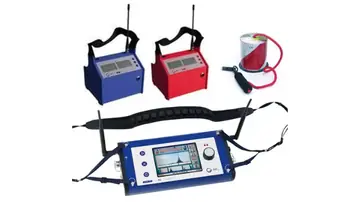
A listening technology that identifies pipe leaks from the acoustic signals of water escaping under pressure. Within distribution networks it pinpoints leak locations with high precision, reducing excavation time and water loss, which makes it essential for NRW reduction programs.
Also called: acoustic correlator, acoustic leak detector.
Water Leak Detection →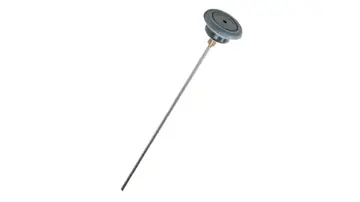
A direct-contact acoustic device that detects the sound of leaks through pipe surfaces, valves and hydrants. It is a frontline tool in leak detection surveys and field training, complementing electronic correlation with hands-on expertise.
Also called: listening stick, mechanical listening device.
Water Leak Detection →Converts ultrasonic noise from escaping air, gas or steam into an audible signal and reading, used for compressed air leak surveys and valve checks while systems run.
Mechanical and Facility Testing →Flow, pressure, level and distance data for DMAs and NRW baselines.
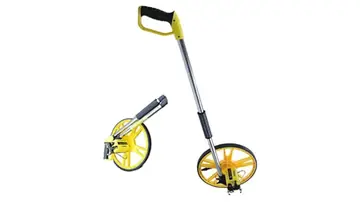
A reliable field instrument for measuring distances along roads, pipelines and infrastructure corridors. It supports site surveys, DMA boundary delineation and network condition assessments with accurate ground-level measurements.
Asset Management →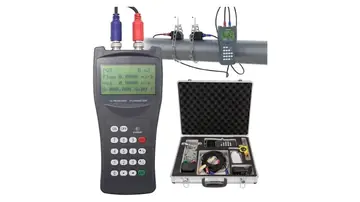
A non-invasive device that uses ultrasonic signals to measure water velocity and volumetric flow through pipes without interrupting service. It is used for field surveys, DMA commissioning and hydraulic performance testing at any point in the system.
Also called: portable flow meter, portable ultrasonic handheld flow meter.
Flow Measurement →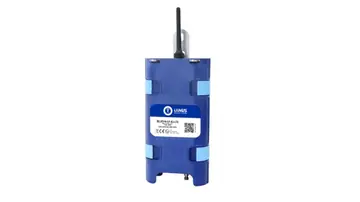
Compact devices that continuously record pressure and hydraulic data across water networks. They are used to monitor DMAs, identify pressure anomalies and build the evidence base for network optimization and NRW reduction.
Also called: pressure logger, pressure sensor, data logger.
Pressure and Level Monitoring →Measures water level in reservoirs, tanks, wells and channels, logging it over time for reservoir level monitoring and open-channel flow calculation.
Also called: level sensor, tank level sensor.
Pressure and Level Monitoring →See inside pipes and measure remaining wall and coating.
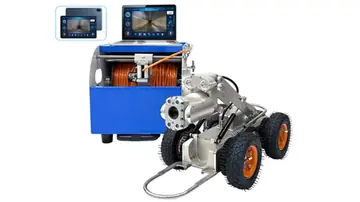
A remotely operated camera crawler that travels inside pipelines and records internal pipe condition. It enables condition assessment of water and sewer infrastructure, identifying defects, blockages and structural deterioration without excavation.
Also called: pipe inspection robot CCTV crawler, in-pipe inspection camera.
CCTV Pipe Inspection →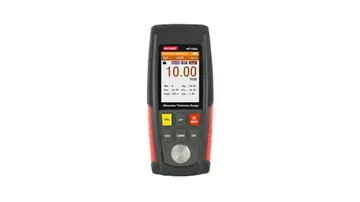
An ultrasonic device that measures the remaining wall thickness of pipes and vessels non-destructively, without access to the inner surface. It is used to assess pipe integrity and deterioration, informing rehabilitation decisions for aging networks.
Also called: ultrasonic thickness gauge.
Pipeline Integrity Testing →Measures the thickness of cured protective coatings on steel pipes, tanks and structures, confirming coatings meet specification.
Pipeline Integrity Testing →Thermal, electrical and mechanical measurements for pumping stations and plants.
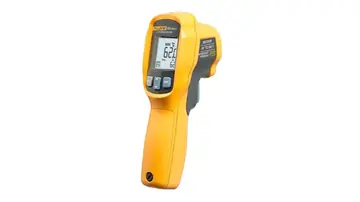
A non-contact tool that measures surface temperatures and detects thermal anomalies in mechanical and electrical equipment. It supports energy efficiency reviews and operational diagnostics, flagging equipment issues before they become costly failures.
Also called: infrared temperature gun.
Infrared Thermography →Captures thermal images of panels, motors, pumps and pipework in operation, revealing hot spots from loose connections, overloads and failing bearings.
Infrared Thermography →Records equipment and process temperatures over time for temperature monitoring and equipment assessment.
Also called: temperature logging digital thermometer.
Infrared Thermography →Records voltage, current, harmonics, power factor and disturbances at pumping stations and plants, for power quality analysis and energy monitoring.
Pumping Station Energy Audits →Measures electrical current without breaking the circuit, used for motor load checks and electrical troubleshooting.
Also called: clamp-on ammeter.
Pumping Station Energy Audits →Measures voltage, current, resistance and continuity for electrical measurements and fault finding.
Pumping Station Energy Audits →Measures the rotational speed of pumps, motors and fans, used in pump performance and machinery assessments.
Mechanical and Facility Testing →Measures oxygen, carbon monoxide, carbon dioxide and temperature in exhaust gases to calculate combustion efficiency.
Mechanical and Facility Testing →Measures air velocity and airflow in ducts and ventilation systems for ventilation performance assessment.
Mechanical and Facility Testing →Measures and logs illuminance for lighting level surveys and lighting energy audits.
Mechanical and Facility Testing →Measures and corrects misalignment between coupled shafts of motors and pumps, reducing vibration, wear and energy use.
Mechanical and Facility Testing →Equitable distribution under intermittent supply.
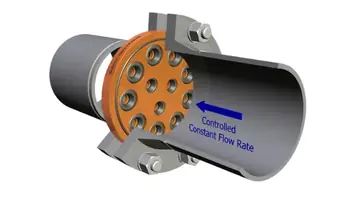
A self-regulating valve that maintains a constant, pre-set flow rate regardless of upstream pressure fluctuations. In water utility operations it is highly effective for managing intermittent supply, reducing water losses and ensuring equitable distribution.
NRW Reduction →